
Using natural remedies to treat female ovarian cysts
 Operemedy 8 months ago
 Warning: Undefined variable $updated_total_view in /home/u419604021/domains/operemedy.com/public_html/themes/oysnews/article.php on line 137
views
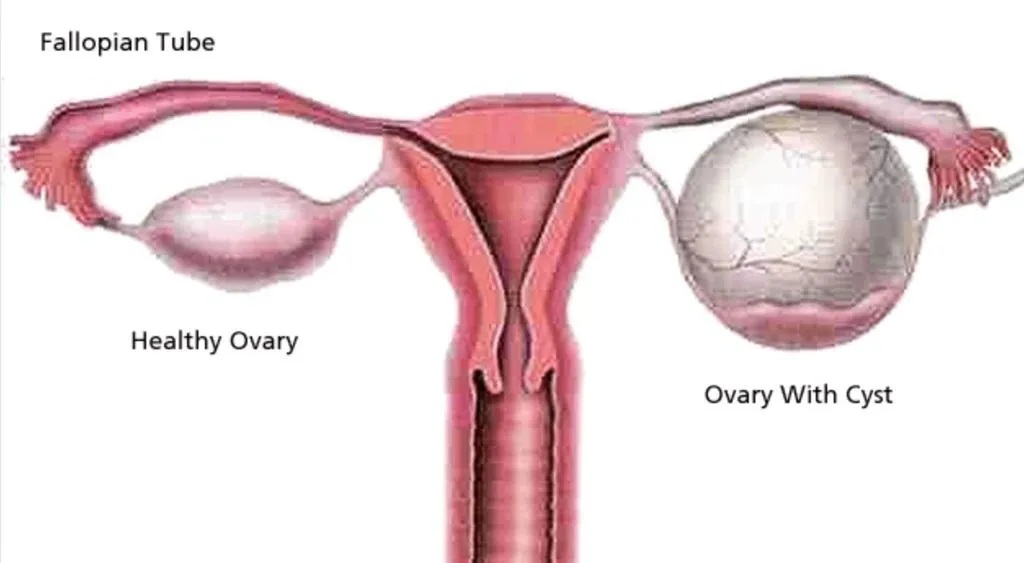
Growths in a woman's ovaries that contain fluid are called ovarian cysts. It could be in either one or both ovaries. They are every woman's worst fear. They result in extremely painful, piercing pains that are occasionally worse than labor pangs.
Large ovarian cysts have the potential to distort or displace the reproductive organs. An ovary damaged by a ruptured cyst may develop scar tissue over time or develop adhesions that connect it to other internal organs.
Although they infrequently occur in postmenopausal women, they are more prevalent in women of childbearing years. The size and form of a woman's ovaries are similar to those of an almond.
Ovarian cyst causes?
- Unusual menstrual periods
- Over-the-counter or emergency medication.
- Imbalance in hormones
- Infections
- Smoking cigarettes
- Gonadotropin therapy for infertility may result in several big cysts.
- The chance of developing a Corpus Luteum cyst has been linked to the use of clomiphene (Clomid, Serophene).
Signs and Symptoms of Ovarian Cysts:
Some ovarian cysts don't show any symptoms at all. They are found throughout a typical physical examination. The likelihood that a cyst will produce symptoms increases with cyst size.
- Pelvic pain, typically on the side that has the cyst. Pain might be abrupt, severe, or fluctuate throughout the cycle.
- Unusual menstrual cycles; unusual cycles may be an indication of a follicular cyst. You can find out if you have irregular cycles by charting your cycle.
- Pelvic pain during sexual activity or hard exercise.
- Vomiting and nausea, which typically occur after a cyst ruptures.
- Spotty bleeding and vaginal pain; abdominal bloating or pressure that may be more noticeable on one side than the other.
- Abdominal pain or pressure when peeing or releasing stool.
Types of Ovarian Cysts
The ovaries create follicles during a woman's normal cycle. Follicles resemble cysts and house the egg that will be released after ovulation. The follicle starts to expand as ovulation approaches. Estrogen and progesterone are also produced and released by follicles. A functional cyst is an ovarian cyst that develops as a result of a follicular dysfunction. Two categories of functioning cysts exist:
1. Follicular cyst: This develops when the follicle doesn't burst open and release the egg at ovulation instead it keeps growing and eventually becomes a cyst.
2. Corpus Luteum cyst: When the follicle fails to release the egg upon ovulation, this condition develops. The follicle transforms into the corpus luteum, or luteal corpuscle. The follicle's egg-releasing hole closes shut, collecting fluid that causes the corpus luteum to develop into a cyst.
Various Cysts
Dermoid cyst: These complicated cysts are hypothesized to develop from cells that produce human eggs. Therefore, these specific cysts may contain skin, teeth, or hair. They hardly ever develop cancer.
Cystadenomas: This type of cyst, which is filled with fluids or mucus, develops from ovarian tissue.
Endometriomas: When endometrial cells adhere to the ovary, a growth known as an endometrioma develops (endometriosis).
The ovary may suffer damage from the aforementioned 3 forms of ovarian cysts, including twisting, the production of scar tissue, and adhesions. The ovary may enlarge and become displaced due to both dermoid and cystadenomas.
Polycystic ovaries: The ovary may be swollen, typically twice the size of a normal ovary, and is related to polycystic ovarian syndrome. A polycystic ovary grows a number of tiny cysts in a row, making the ovary's surface resemble a string of pearls. A typical endocrine disorder is PCOS. These kinds of cysts are not present in the ovaries of all women with PCOS.
Medication & Prevention
How to prevent ovarian cysts
- Reduce Estrogen: One of the primary contributors to hormonal imbalance—which leads to disrupted ovulation—is excess estrogen. Stopping your exposure to xenohormones is one of the finest strategies to get rid of your body's extra estrogens.
- Stay away from xenoestrogens and estrogens by Give up soy products
- Only consume organic dairy and meat.
- Never microwave plastic-wrapped food.
- Never consume water from a plastic bottle.
- Avoid using products with perabens and mineral oil.
- Zero alcohol
- Avoid soda drinks
Natural treatment for ovarian cyst, PCOS, fallopian tube blockage, and low sperm count.
This concoction is magical! Get the following leaves, please;
- Soursop Leaves
- Guava Leaves
How to get ready
Take a good amount of guava and soursop leaves, and wash them thoroughly. Combine it in a pot and then boil it. Consume it warm. Morning and evening: a half-cup.
It also benefits those with high blood pressure because it decreases blood pressure.
However, if you already have low blood pressure, kindly drink this remedy for two weeks before taking a vacation for one or two weeks before continuing.
People with low blood pressure should only receive medication for one to two weeks at a time.
 Likes 0
Be the First to Comment:
Write a comment...